How Long Do Baby Robins Stay in the Nest Before They Fly
Eric is an apprentice birder and photographer who is amazed by the natural world just about every day.
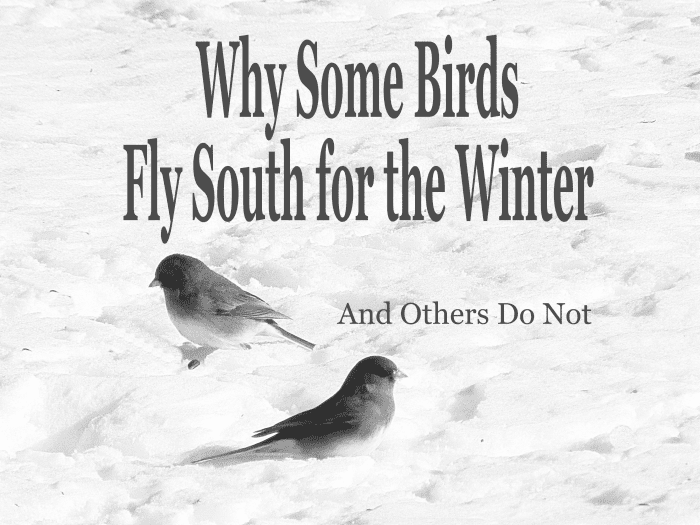
Why practice some birds fly south for the wintertime while others stay to brave the common cold and snow?
The Coming of Winter
In the northern reaches of the The states, but earlier the leaves start to fall, birds begin to flock together and prepare for their annual migration south. Birds that we usually see alone or in small groups during summer months volition gather with others of their kind, or often with those of other species. Waterfowl will congregate and form that well-known V design in the heaven as they journey to warmer climes.
American robins vanish, not to return until the jump, reminding us that a long, cold winter is begetting downward on u.s.. Every bit ominous as the dirge of some decease knell, when the birds kickoff to leave we know the sweet warmth of summer is but a memory.
Merely not all birds fly south. Some remain through the snow and the cold, and some species are even more arable during the winter months. Why practice some birds fly south while others stay put? Why do some appear to thrive in the snowfall? When birds migrate, where do they get, what do they do, and how do they decide when information technology's hereafter dorsum?
And how the heck do they know where they are going?
These are some of the things I ponder each winter as I lookout the little black-capped chickadee dart around my birdfeeder, and wonder where the rose-breasted grosbeak has gone. So let's discover out why birds wing southward for the winter!
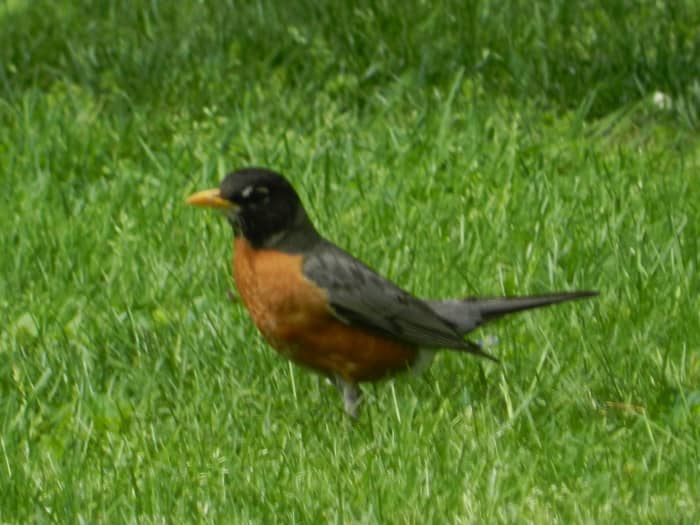
The American robin is a migratory bird that is seen as a first sign of spring in many parts of N America.
Why Do Birds Fly South?
It seems logical that the reason many birds spend the winter months in more pleasant, southern locations might take something to practice with the warmth of the sun. This isn't exactly the case. Birds can and do survive extremely harsh winters. Similar most migratory animals, the primary reason for moving is nutrient.
In the summertime, nutrient is arable in northern climates because insects are active and plants and copse are flourishing. When it comes time to brood, birds want to be where they have the best shot at finding food for themselves and their chicks. When it becomes hard or impossible to find food, it'south time to go to warmer climates where food is still plentiful.
For case, in northeastern states, the American Robin will get in in the spring and leave former in the early on fall. Robins eat worms, beetles, grubs, and other such insects, which they aren't going to detect in the cold and snow. You'll never run across a robin at your bird feeder; they will not eat foods that sustain some other birds. They need to fly south, or they will starve.
Ducks, geese, and other waterfowl are other good examples. Their lakes and ponds freeze, making it extremely difficult to survive in their intended surroundings. To detect acceptable food, escape predation, and maintain their healthy quality of life they'll move on to warmer climates. They fly in that 5 pattern to conserve energy, and to improve advice betwixt birds. Even so, sometimes waterfowl are known to overwinter in common cold climates when they are overfed by humans.
How Do Birds Know When it Is Time to Wing South?
Scientists say birds likely have an innate response to the reduction in daylight hours, signaling to them that wintertime is near and they'd better get moving. This is why, no matter how much yous stock your bird feeder, many bird species are going to caput south just the same. The exact day they start their journey will be influenced by local weather condition patterns, but it is the daylight that gives them the signal to migrate.
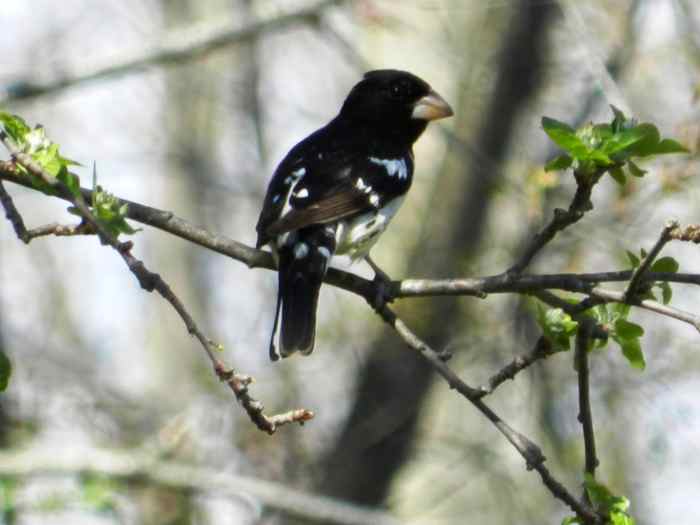
The rose-breasted grosbeak will wing southward for the wintertime, and may migrate every bit far equally Southward America.
Why Practice Some Birds Stay Through the Wintertime?
Some birds don't seem to mind the winter. The black-capped chickadee, northern primal, bluish jay, tufted titmouse, and others will brave the nearly brutal common cold and snow. Feathers are pretty skillful insulators, and nearly birds could go far through a harsh winter if they had to.
So if bravery isn't the reason birds stay through the wintertime, what is? Over again, the reason is their nutrition. Some birds don't need to rely on the plenty of summertime. They tin can forage for insects in the bark of trees and find enough nutrient to make information technology through the cold, night months. In fact, in some areas, even the American robin is known to stick effectually through the winter months, if it can find enough food.
Read More From Owlcation
Other birds really become more than plentiful in winter. The dark-eyed junco is an example of a bird that volition happily inhabit areas other birds have vacated in the winter months. In the Northeastern United States, Juncos will move down from their breeding grounds in Canada to overwinter in a comparatively milder climate.
If a bird is of a species that can find nutrient in the winter, information technology has no need to drift. Well-stocked bird feeders may assist some species during periods of exceptionally harsh weather, merely otherwise, the birds that stay through the snow and ice will know how to notice enough food to survive.
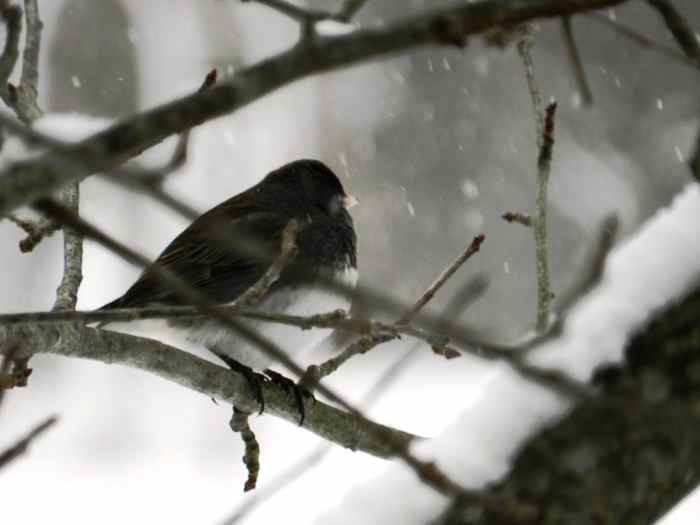
The dark-eyed junco spends its winters in the United States and migrates to Canada for the summer months.
Where Do Birds Go When They Wing S?
When the birds leave the northern states, where practice they go, and how do they know how to get there? Many migrating birds find their fashion to United mexican states or Florida, overwintering in tropical climes. Others simply demand climates where the nutrient is abundant enough to sustain them.
How exercise migrating birds know where they are going?
Remarkably, birds seem to possess innate knowledge that helps them to negotiate their long migrations. They are believed to navigate by the sun during the mean solar day, and the moon and the stars at night.
There is also some research that says they are aware of magnetic fields in the earth and use them to notice their way. It'southward a kind of internal GPS, and ane of the more impressive abilities in the animate being kingdom.
The next question is one you may ask of people who move to Florida in the wintertime: Why practice they come back? Of class, we can't speak for the people, but for the birds, again, information technology'south hardwired into their systems. When daylight hours brainstorm to lengthen, birds know it's time to come back to their breeding grounds.
Similar many animal behaviors, the whole ordeal is naturally designed to facilitate the survival of the species through procreation.
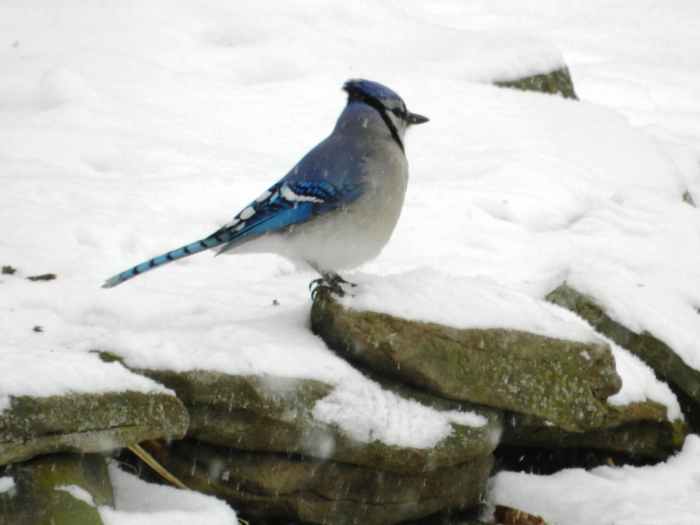
The blue jay sticks it out through the snowy winter .
The Astonishing Bird Migrations
Birds are everywhere. They're easy to accept for granted, but they actually are wonders of nature. The deeper one digs into their behaviors the more than interesting they become. This article dealt with North American birds, but there are some amazing bird facts from around the world.
For case: Did you know the bar-tailed godwit migrates from China to New Zealand in one flight, a altitude of over five,500 miles?
That's crazy!
Now you know a lilliputian more about why birds fly south, what they do when they go there, and why some are brave enough to stay through the wintertime.
Resource and Further Reading
Equally always, the following resource were primal in the creation of this article:
- Cornell Lab of Ornithology
- National Audubon Society
This content is accurate and truthful to the all-time of the author's knowledge and is not meant to substitute for formal and individualized advice from a qualified professional.
But a pupil on May 06, 2019:
I'm using this for a enquiry paper. This made it a lot easier. Kudos to you lot.
Eric Dockett (author) from The states on November 20, 2015:
Cheers Kristen!
Kristen Howe from Northeast Ohio on November 19, 2015:
Eric, this was a real interesting hub on bird migration in the winter. I really enjoyed information technology and learned some good facts about it. Thanks for sharing.
Eric Dockett (author) from United states of america on October 23, 2015:
Thank you Suhail, and to your dog as well. :-)
Suhail Zubaid aka Clark Kent from Mississauga, ON on October 22, 2015:
Very educating indeed. I liked the style you lot wrote it.
Promise to read many more than from you lot!
Source: https://owlcation.com/stem/Why-Some-Birds-Fly-South-for-the-Winter-and-Others-Do-Not
0 Response to "How Long Do Baby Robins Stay in the Nest Before They Fly"
Post a Comment