Can You Suplement Rye Grass Straw for Beef Cow Winter Feed
Impress this fact sheet
R. Baird LeValley* (11/20)
Revised by Retta Bruegger, Jenny Beiermann, Frank Garry, Eric McPhail and Seth Urbanowitz**
Quick Facts…
- Drought is a function of the normal production cycle. Dealing with dry periods and decreased feed supplies needs to exist function of the overall direction plan.
- In many cases, the all-time solution for cow/calf producers is to utilise a limit-fed, high grain nutrition fed in dry lot or semi-solitude.
- Since intake on concentrate diets is restricted, cattle may appear gaunt and bear as though hungry, withal, later on xiv to 21 days, they will adapt to the reduction in feed intake.
- Consider the total cost of culling feeds. If you must travel a long distance to get a 'cheap' alternative feed, make sure the transportation makes financial sense.
- Feed strategically based on cattle nutritional needs individually and throughout time. You lot tin can waste money past overfeeding a cow that does not demand information technology. Consider whether some cattle need more than nutritional back up than others.
A Note on Drought
Drought is part of the normal product cycle in Colorado and integrating it into the overall management plan can help forestall financial losses, reduce stress associated with it, and lesson impacts to the health of the herd and country.
In the face of drought, producers may sell livestock to decrease herd size and grazing pressure, but alternative feeding strategies are an selection for the remaining population.
Alternative Feeding Options
When deciding on an alternative feeding plan, there are several options to consider. The goal is to re-breed cows while maintaining calving intervals, maintain pounds of calf produced per cow, and minimize feed price per pound of calf sold. When considering feed options, think virtually the following:
- Design a feeding plan to utilize local feeds fully,
- Supplement depression-quality feeds correctly
- Analyze forages and feed precisely
- Substitute 1 pound of grain or other concentrate feed for 2 pounds of alfalfa hay or 3pounds of grass hay,
- Advisedly residuum every ration against the creature's requirements,
- Make every effort to reduce feed losses
- Feed the highest quality feeds to animals that take higher feed requirements (i.east., growing replacement heifers or growing calves),
- Feed the lower quality roughages to cows in the heart-third stage of pregnancy (i.e., tin you relieve money past feeding lower quality feed strategically),
- Save the amend quality feeds for periods before and after calving, and
Treat low-quality roughages with various feed additives. Additives can improve palatability and feeding quality. (Brownson, 1996).
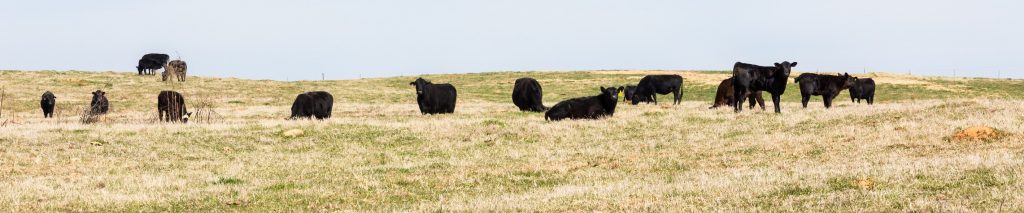
Stretching the Hay Pile
Substitute one pound of grain or other concentrate feeds for 2 pounds of alfalfa hay or 3 pounds of grass hay. Practise not exceed grain feeding beyond 0.four percentage of the live body weight when forage is the major component of the nutrition. Grain is non always practical to feed, but at that place are ways to feed information technology fifty-fifty in pasture or in rangeland situations. Many producers use barrels, gated pipage dissever in one-half, bunks, or former hog feeders mounted on a trailer.
Relocating the cowherd into dry lot is a management alternative that may allow producers to take advantage of grains and byproduct feeds (Wright, 2002). Diets for dry lot cows are formulated to encounter the food requirements of the cows while minimizing feed costs. Every bit a upshot, intake is generally limited, and more concentrate feeds are included to devalue the diets.
Since intake on concentrate diets is restricted, cattle may appear gaunt and behave as though hungry. Subsequently xiv to 21days, they volition accommodate to the reduction infeed intake, but they may continue to announced gaunt. Cattle should adapt to loftier-grain diets in seven to ten days and should be observed closely during that time. A minimal amount of roughage is required to maintain rumen function. Generally, cows should receive at least 0.v percent of their body weight every bit roughage (ninety percent dry out matter footing). Thus, a 1,200-pound moo-cow should receive at least 6 pounds of roughage per twenty-four hours.
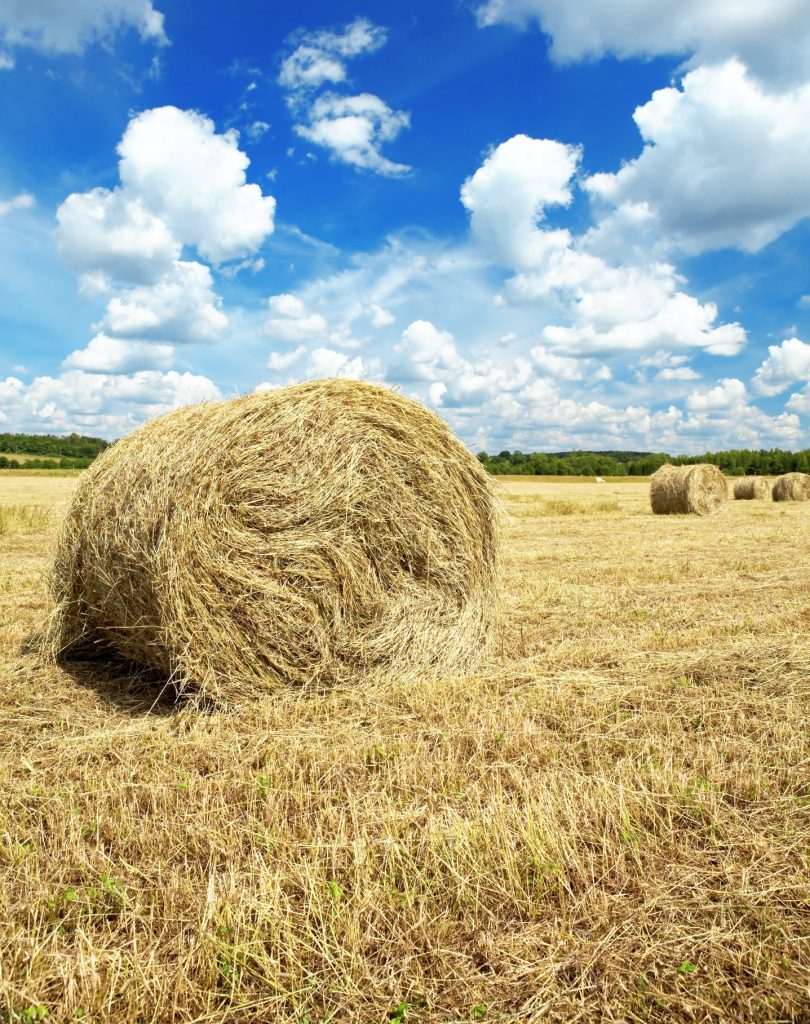
In many cases, the best culling for cow/dogie producers is to feed a limit-fed, high grain diet in dry lot or semi-confinement. The about expensive nutrient for a cow is energy (TDN). Table 1 shows the nutritional requirements and typical rations for beef cows – either a fall or spring calving cow where the calf has been weaned or a lactating moo-cow producing 14 to16 pounds of milk per day (calves should be creep-fed). The initial reaction of many people evaluating these diets is that cows will not survive on that minor corporeality of feed. But information technology is important to proceed in mind that grain is a full-bodied energy source with10 pounds of grain supplying the energy equivalent of 15 to 20 pounds of hay.
Cows should be slowly adjusted to high grain feeding, just similar feedlot cattle. A suggested practise is to begin with 2 to 3pounds of whole shelled corn per head, per day and free-selection roughage. Then, increase the grain by 1 pound per twenty-four hours, and reduce the hay by 2 pounds each 24-hour interval until the last ration is attained. Make sure plenty of bunk space is provided then all cows can consume at the same fourth dimension. Feed two times per day, if possible. One time the cows are switched over to the limit fed, grain-based ration, observe their torso condition(fleshiness) over time and suit the grain as needed to maintain adequate condition. Evidently, the rations shown in Table 1represent loftier levels of grain feeding to minimize the amount of scarce forage used. Nevertheless, other proportions of grain and roughage can be used depending on the forage supply, so long as the ration is formulated to run into the cow's nutrient requirements.
Boosted Alternative Feeds
Alternative feedstuffs used to decrease the dependency on alfalfa or grass hay include harvested corn stalks, millet hay, wheat straw, sorghum-sudan, cottonseed hulls, soybean hulls, wheat middlings, and corn gluten feed. Cottonseed hulls are depression in protein (iii.v percentage), but equal in energy to tardily cut grass hay. Cottonseed hulls should be fed with 2 to iii pounds of 30 percentage to 40 percent all-natural poly peptide supplement and mineral. The crude protein in soybean hulls ranges from ten per centum to16 percentage. Soybean hulls can be fed without additional provender, however, the digestible energy increases when fed with hay in a 2-to-1 ratio. Wheat middlings are a good source of protein (xviii percent) and energy. It is best to mix at least 5 pounds of provender with the wheat middlings. Corn gluten feed is a byproduct of the corn wet milling industry and is available in wet or dry out form. Information technology is loftier in protein (25 percent) and should be fed at a rate of 0.v percent of torso weight, with a forage source. A calcium-phosphorus mineral mixture and salt should always be available to cows, especially when utilizing whatever alternative feeds. Vitamin A may need to be supplemented, also.
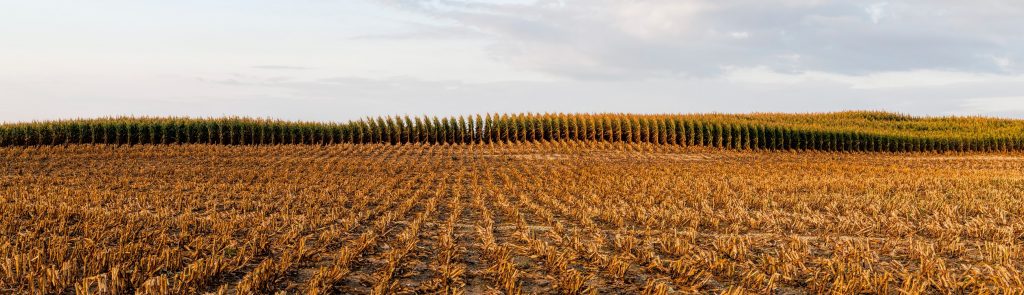
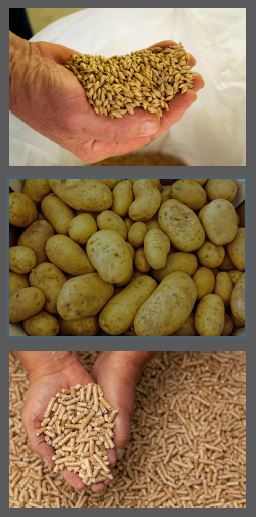
In particularly dry out times such as the 2018 drought in western CO, or the drought + COVID state of affairs in 2020,you may consider unconventional feeds, depending on local availability. Examples include distiller grains, hemp pellets, or cull potatoes. As with all alternative feeds, doing a nutritional analysis is essential (see below), and thoughtful management is advised. Anarchistic feeds, and switching diets to rapidly, can cause bug, and livestock must be carefully monitored. For case, where cull potatoes or other root crops are an pick, consider processing them before feeding. Animals may choke on root vegetables, though this is more of an event when animals are stressed and competing with others for feed. Excess sugariness potatoes tin cause dental caries and peradventure loss of molar teeth.
Some alternative feeds like distillers grains may have a short shelf life, simply you lot can extend this fermenting them past making "cow lasagna." This entails unrolling a round bale of the cheapest straw grass hay that you lot tin find and spreading wet distillers grains on top, and so another bale, followed past distillers' grains. Repeat this as much as is safe (i.due east. will non autumn over). Then pack with a tractor to resemble a silage-like quality. Cover with a tarp or silage plastic and permit it ferment for at least 30 days. Asa more stable feed, you tin feed wet distillers over a longer period and do non take to worry about information technology spoiling in vii-9 days. Though these provide a few examples of alternative feeds, as with any feed, it is essential to conduct a nutrition assay and to evaluate if the feed alternative makes sense (see "Economic Considerations" below). Additionally, your local feed store is a skilful resource, besides every bit your county Extension amanuensis.
Conduct a Nutritional Assay
When considering alternative feedstuffs, deport a nutritional assay. In improver, testfor nitrates in almanac forages, including sorghums and for prussic acid levels in sorghums,sudans, and sorghum-sudan varieties. (Come across fact sheets ane.610, Nitrate Poisoning and ane.612, Prussic Acid Poisoning in Livestock.)
Economical Considerations
The economical viability of using culling feeds is a key consideration. Hay prices average $200-240/ ton in western Colorado. Upon the onset of drought conditions, hay prices oft increase and may become deficient. Keep an eye on local hay availability and prices at the commencement signs of drought. For example, if you learn of a cheaper alternative feed, consider the location of the feed source and the transportation costs to obtain the feed. If you produce high-quality hay, it may exist financially viable for you to sell the loftier-quality hay at a premium price and purchase lower-quality hay to feed for extended periods. Feed prices and cattle prices fluctuate, and in that location is no one-size-fits all solution, but general considerations with regards to economics can help maintain financial sustainability and herd health in drought. For information and resources to help you brand cost-effective decisions regarding alternative feeds during drought, visit the CSU Extension Decision Tools Page.
Planning for Spring Fodder
Spring forage is always a premium. Small grains, such equally cereal rye, triticale, or oats, tin exist used to fill up the void of bound forage. In planning for next year, found these varieties in Baronial or September to provide fodder the following spring. Keep in mind that nitrates may be an result if the almanac forage has been stressed (drought, air current, excessive soil nitrogen, shade, frost, certain herbicides, acid soils, depression growing temperatures, and food deficiencies), and exist sure to have the forage tested for nitrates. Up to a threshold, high nitrate forages are consumable by diluting them with other feedstuffs and supplementing with energy (fact canvas 1.610, Nitrate Poisoning).
Planning for Summer Forage
Plant sorghum-sudan for summer grazing. Sorghum-sudan uses less water than corn and produces enough provender for two to three cuttings or grazing rotations. Notwithstanding, care must be taken when grazing or harvesting sorghum-sudan. Sorghum-sudan is susceptible to prussic acid accumulation. Prussic acrid accumulates in stressed plants. The stress may be a result of drought, a freeze, excessive fertilization, or wind. Grazing on stunted plants during drought is the most mutual cause of poisoning of livestock by prussic acrid-producing plants. Direction of sorghum-sudan includes:
- No grazing or light-green chopping for several days later on a killing frost,
- No grazing until the regrowth of shoots is 15 to 18 inches tall,
- Make sure that animals are not hungry and turn them in later in the solar day, and
- Dilute with grass or alfalfa hay.
Other forages that can be planted for summer grazing are millets, teff, Italian rye or oats. They can besides be grazed in the fall. Planning for fall forages can exist critical during drought years every bit lack of h2o and forage may force some producers to come off of the rangelands and summer pastures early. Planning in accelerate ensures that there is ample grazable forage available for the livestock.
Planning for Fall Provender
In June, establish winter varieties of rye, triticale or wheat. In addition, plant oats, sorghum-sudan, teff or canola. Turnips planted in late summer/early fall can be grazed tardily autumn and into winter.
Additional feeding and harvesting strategies include windrow grazing, stockpiling forage, ammoniation of forages, and adding liquid supplementation to the provender.
Drought is a office of the normal production wheel and needs to exist part of the overall management programme. Preparing for these dry periods and decreased feed supplies is essential. Alternative forages can assistance span the gap and reduce financial losses. For resource on comprehensive drought planning for the ranch, see the Drought Outlook webpage.

| Table 1. Possible high grain rations for dry and lactating cows. | |
| Dry out Cows | Lactating Cows – 1050 lbs* |
| one. Requirements: | 1. Requirements: |
| TDN – 9.2 lbs | TDN – 13 lbs. |
| Protein – i.3 lbs | Poly peptide – 2.3 lbs |
| Phosphorus – 16 grams | Phosphorus – 24 grams |
| Calcium – 16 grams | Calcium – 32 grams |
| Vitamin A – 25,000 IU | Vitamin A – 40,000 IU |
| ii. Possible Ration: | two. Possible Ration: |
| Corn – x lbs | Corn – 13 lbs |
| Hay** – 3 lbs | Hay** – 4 lbs |
| Soybean Meal – 0.five lbs | Soybean Meal – 2.0 lbs |
| Free Choice Mineral (high calcium feedlot type with Vitamin A) | Gratuitous Choice Mineral (high calcium feedlot type with Vitamin A) |
| * For each 100-pound increase in body weight, increase TDN by .7 pound and protein past .1pound per day. | |
| ** Assumes average to poor quality grass hay, or crop residues. If good alfalfa hay is fed, no supplemental protein is needed by the dry moo-cow and the lactating cow would need merely 1pound of soybean repast or equivalent. Urea tin can be used as the protein source in these rations due to the higher free energy level. | |
References
- Brownson, R. 1996. Beefiness Cattle Feed Management During a Drought. CL1130. Cow-Dogie Management Guide and Cattle Producer'due south Library. University of Idaho, Moscow, ID.
- Stanton, T. 1994. Colorado Country Academy fact sheet i.610, Nitrate Poisoning in Livestock. Fort Collins, CO.
- Stanton, T. 1994. Colorado Land University fact sheet ane.612, Prussic Acid Poisoning in Livestock. Fort Collins, CO.
- Wright, C., 2002. Limit-Feeding Cows in a Drylot. ExEx 2032. S Dakota Country University Extension Actress. Brookings, SD.
*R. Baird LeValley, Former Colorado State University Extension livestock and range agent, Tri River Area. **Eric McPhail, Colorado State University Extension, county managing director, Gunnison. Retta Bruegger, CSUE, Regional Specialist, Range Management, Western Region. Jenny Beiermann, CSUE, Regional Specialist, Ag and Business organisation Management, Western Region. Frank Garry, CSU, Professor, Department of Clinical Sciences, and Integrated Livestock Management. Seth Urbanowitz, CSUE, Regional Specialist, Agronomy, Western Region. 4/03. Revised xi/twenty.
Go to top of this page.
Source: https://extension.colostate.edu/topic-areas/agriculture/alternative-feeds-for-cattle-during-drought-1-626/
0 Response to "Can You Suplement Rye Grass Straw for Beef Cow Winter Feed"
Post a Comment